Festival Weather Alerts: Know the Official Instruction Before You Need It
A personal weather check and the organizer’s safety instructions serve different roles. Identify the official update channels, read the site’s emergency plan and keep your group ready to leave a stage when directed.
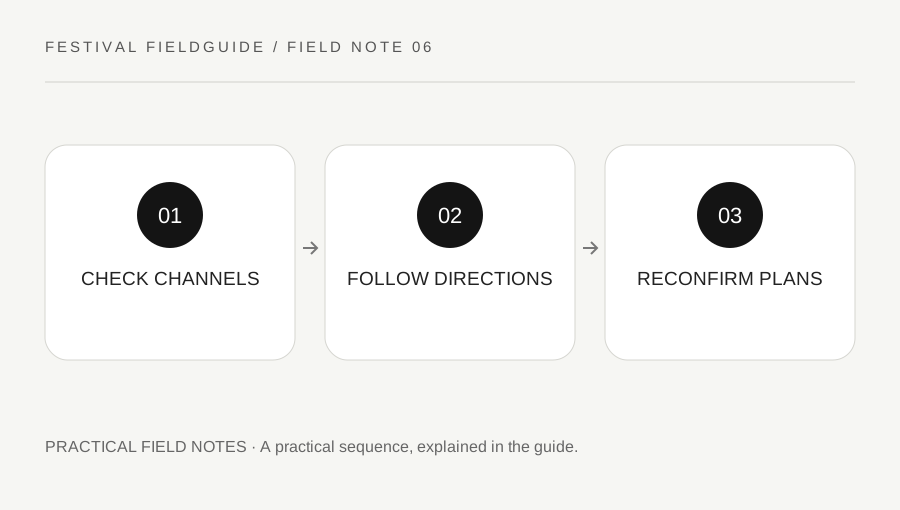
Original explanatory diagram. Examples illustrate a method or decision; they are not claims of personal testing.
Use the forecast for preparation
Check a reliable local forecast before travel and again near the event. Prepare permitted clothing and equipment for likely conditions, but do not treat an earlier forecast as a guarantee. A weather app's summary icon cannot describe every hazard or site decision.
Read the organizer's safety page for alert channels and emergency instructions. Lollapalooza, for example, identifies official update routes and app notifications for emergency communication. Use the information for the actual edition and enable relevant notices where available.
Keep the distinction clear: a forecast helps you prepare, while event staff direct operations on the site. A private group opinion that the sky looks fine does not override an evacuation or pause. Save the official channel before the crowd and noise make it difficult to search for the correct account.
Know the route and shelter instructions
Review the current map and the organizer's designated exits or shelter guidance. Do not assume that a tent, stage roof, tree or familiar meeting point is a safe thunderstorm shelter. The National Weather Service provides general lightning-safety guidance, while the organizer supplies the site-specific operating plan.
If instructions are unclear before the event, ask the official team rather than improvising a route through restricted space. Consider any access needs and how the group will follow directions without waiting for a long phone conversation.
For a worked example, a group has an ordinary reunion point beside an internal stage. During an evacuation that point is no longer the plan. They follow staff toward the instructed exit and use their emergency communication arrangement afterward, rather than returning into the site to complete a routine meetup.
Respond to the instruction, not the rumor
When an alert occurs, listen to staff and official announcements. A screenshot from an unknown account or a message from another festival is not confirmation of the local situation. Keep routes clear and avoid stopping in an exit path to debate the schedule.
If you or someone nearby needs assistance, contact the designated event staff or emergency service as appropriate. Do not delay urgent help while waiting for a group chat to respond. This guide is an organizational plan, not a medical or emergency-response service.
Keep the phone available for useful communication and avoid spreading unverified claims about cancellation, reopening or transport. A message should identify its source and time. Repeating an old announcement without context can create confusion after the organizer has issued a newer instruction.
Rebuild the day only after official updates
A reopening, revised timetable or cancellation should be confirmed through the organizer's current channels. Do not assume that a paused performance will resume at its original time or that entry procedures remain unchanged. Staff instructions and updated schedules take priority over a saved plan.
Recheck return travel after a major delay. A transport departure, pickup arrangement or accommodation access window may need attention. Keep those logistics separate from the decision about whether the site is open; a private ride cannot establish permission to re-enter.
Finish by reviewing how quickly the group found the official instruction and whether everyone knew the route. That is a useful improvement target for the next event. A good weather plan does not predict every interruption. It reduces confusion by identifying reliable channels, leaving room for staff direction and keeping personal plans flexible when conditions change.
A practical checklist
Choices are saved in this browser. Reset them here or clear this site’s browser storage.
Questions that come up
Can a tent be assumed safe during lightning?
No. Do not improvise shelter from appearance. Follow official site instructions and authoritative lightning-safety guidance.
Should I trust a reposted cancellation screenshot?
Verify it through the organizer’s current channel and check the time and event edition.
Does a forecast override an evacuation instruction?
No. Follow the organizer and on-site staff. A forecast app does not manage the conditions or operations at the site.
References & scope
Background references checked on 18 October 2026. Worked examples and diagrams are original teaching material.