Festival Listening: Plan Ear Protection, Distance and Quiet Breaks
A full festival day can involve prolonged amplified sound. Build hearing protection and quieter breaks into the plan before choosing where to stand, and use authoritative health guidance when questions arise.
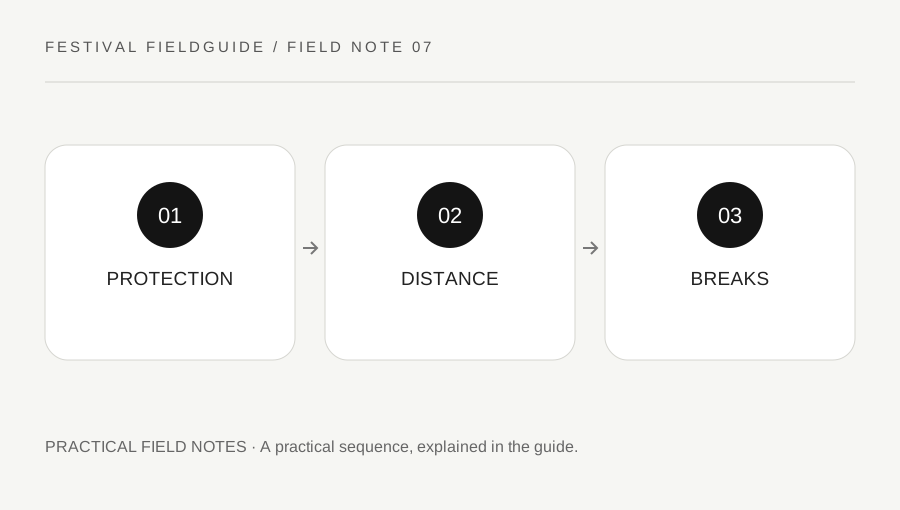
Original explanatory diagram. Examples illustrate a method or decision; they are not claims of personal testing.
Treat the whole day as the context
A headline set is only part of the listening time. Travel media, early performances, nearby stages and after-events can add exposure. Write the broad day plan so that breaks do not disappear simply because each individual set seems short.
WHO's safe-listening guidance emphasizes reducing harmful exposure, using suitable ear protection and taking breaks from loud environments. Read its current advice rather than treating this article as a personal medical assessment. No particular place in a crowd can be guaranteed safe by a generic website.
If you have existing hearing concerns, need individualized advice or develop symptoms, consult an appropriate health professional. The practical planning task here is making protective choices available and usable, not calculating a personal exposure limit from an unverified phone reading or promising that one product removes every risk.
Prepare suitable ear protection before arrival
Choose hearing protection intended for the situation and learn its fitting instructions in advance. Carrying an unopened item at the bottom of a bag is less useful than knowing how to use it correctly. Check the festival's permitted-item rules and keep a clean, accessible storage option.
Follow the manufacturer's instructions for fit, maintenance and replacement. Do not assume that every earplug offers the same reduction or that poor fit provides the printed protection. If you are uncertain about suitability, seek appropriate professional guidance rather than relying on a stranger's product ranking.
For a worked planning example, an attendee checks the item rules, practices fitting the selected protection at home and places it in an accessible permitted pouch. A companion knows where the spare is. This is an organizational example, not a claim of product testing or a guarantee of a particular reduction.
Use position and breaks deliberately
Avoid making proximity to a loudspeaker the only measure of a successful set. Distance and the layout can change the sound level, and moving to a less intense position may be a useful choice. Do not wait for discomfort before considering a change.
Identify official quieter or rest areas where available, without assuming every festival provides the same facilities. Put breaks between priority performances rather than treating them as spare time that can always be sacrificed. A group can agree that someone may step away without losing the entire reunion plan.
Keep protection in use as instructed during the loud environment. Removing it repeatedly to hear a brief conversation can undermine the routine. Move to a suitable quieter place for communication when practical, and maintain awareness of staff instructions and the people around you.
Review comfort and seek help appropriately
If sound becomes uncomfortable or you notice concerning symptoms, leave the loud area and seek appropriate advice. Do not use this page to diagnose a hearing condition or decide that a symptom is harmless because the set was short. The on-site medical team can direct immediate concerns, while a qualified clinician can assess ongoing symptoms.
After the event, review whether the plan worked: protection was accessible, fit was understood, breaks occurred and the group supported stepping away. Those are concrete habits you can improve without claiming a precise personal dose from incomplete information.
Finish by adding ear protection and quiet-break decisions to the next festival schedule alongside tickets and transport. The purpose is preserving a practical listening routine across the entire day. Enjoyment and protective planning can coexist when the decisions are made before the loudest moment rather than after the group is already committed to one crowded position.
A practical checklist
Choices are saved in this browser. Reset them here or clear this site’s browser storage.
Questions that come up
Do earplugs guarantee that any position is safe?
No. Fit, product, sound level and duration matter. Follow authoritative guidance and use distance and breaks as part of the plan.
Can a phone reading establish my personal safe limit?
Not reliably. Device readings and exposure context vary. This page does not calculate or assess a personal hearing dose.
Should breaks be planned or only taken after discomfort?
Build them into the schedule. Do not make discomfort the only trigger for reducing exposure or seeking advice.
References & scope
Background references checked on 18 October 2026. Worked examples and diagrams are original teaching material.